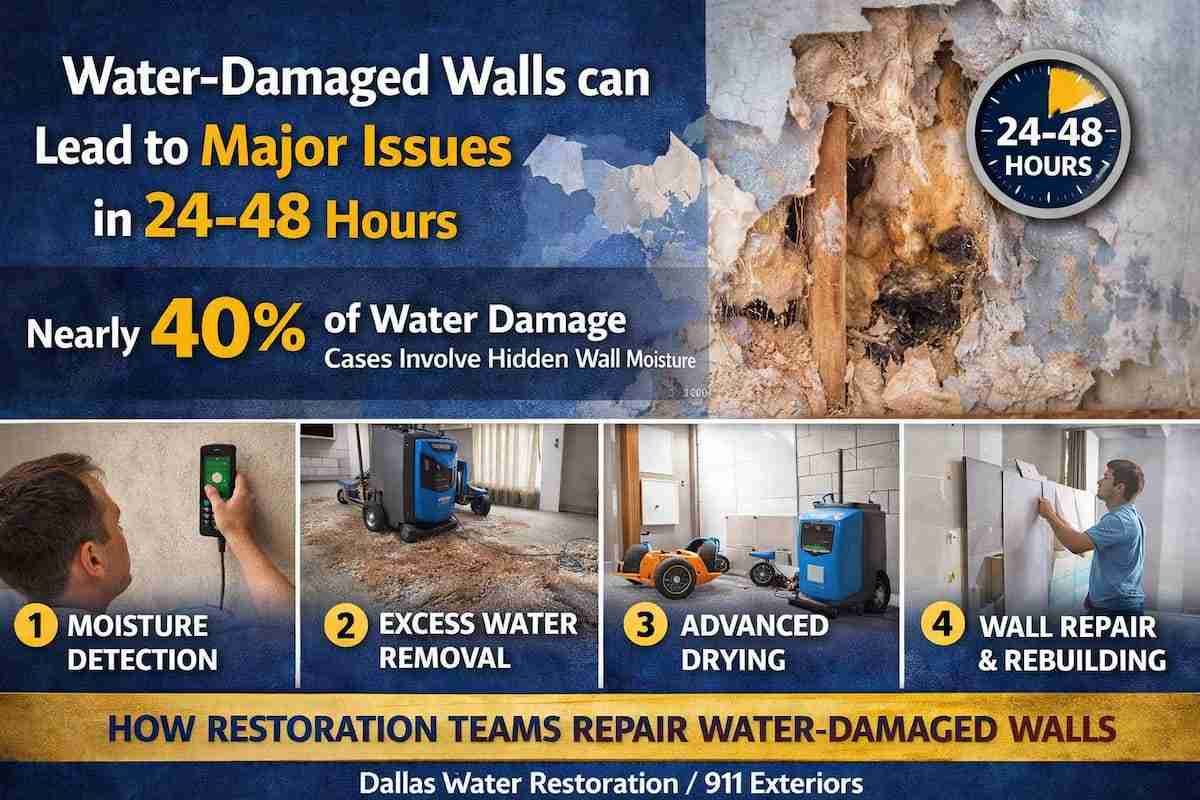
Water damage doesn’t just affect what you can see; it penetrates deep into walls, insulation, and structural materials. According to industry data, nearly 40% of water damage cases involve hidden wall moisture, which, if left untreated, can lead to mold growth and structural deterioration within just 24–48 hours.
For homeowners and businesses dealing with water damage restoration in Dallas, understanding how professionals repair water-damaged walls can help you act quickly and avoid costly long-term damage.
Why Water-Damaged Walls Require Immediate Attention
Water-damaged walls are more than a cosmetic issue. Moisture trapped inside can weaken materials, reduce indoor air quality, and create the perfect environment for mold.
In Water Damage Repair Dallas, early intervention is critical to stop moisture from spreading and causing further damage. Delays can result in extensive repairs and higher costs.
Step 1: Detailed Inspection and Moisture Detection
Identifying Visible and Hidden Damage
Restoration teams begin by assessing both visible damage and hidden moisture within walls. Water often travels behind surfaces, making it difficult to detect without specialized tools.
Professionals handling water damage restoration in Dallas use moisture meters and thermal imaging to locate affected areas accurately.
Determining the Extent of Saturation
Not all walls are affected equally. Some may only have surface moisture, while others may be fully saturated. Accurate evaluation ensures that Water Damage Repair Dallas is targeted and effective.
Step 2: Water Extraction and Initial Drying
Removing Excess Moisture
The next step is to remove any standing water and excess moisture from the affected area. This reduces the overall drying time and prevents further absorption. Efficient extraction is a key component of Water Damage Restoration Dallas.
Stabilizing the Environment
Technicians create controlled drying conditions using air movers and dehumidifiers. This helps prevent moisture from spreading to unaffected areas. Proper stabilization supports successful Water Damage Repair Dallas.
Step 3: Removing Damaged Materials
When Drywall Needs to Be Removed
If drywall is heavily saturated, it may need to be cut and removed. Keeping damaged materials can trap moisture, leading to mold growth. This step is essential in thorough water damage restoration in Dallas.
Inspecting Insulation and Framing
Insulation often absorbs water and must be replaced if compromised. Wooden framing is inspected for moisture and structural integrity. Comprehensive Water Damage Repair Dallas ensures all affected components are addressed.
Step 4: Advanced Drying Techniques
Controlled Airflow and Dehumidification
Drying walls requires a balance of airflow, temperature, and humidity control. Air movers increase evaporation, while dehumidifiers remove moisture from the air. This process is critical to ensure complete drying.
Targeting Hidden Moisture
Technicians focus on hard-to-reach areas like wall cavities and substructures. Without proper drying, moisture can remain trapped. Effective Water Damage Repair Dallas eliminates hidden moisture risks.
Step 5: Cleaning and Sanitization
Removing Contaminants
Water damage can introduce contaminants, especially if the source is not clean. Walls must be cleaned and disinfected to ensure safety.
Preventing Mold Growth
Antimicrobial treatments are applied to prevent mold from developing in damp areas. Proper sanitization supports long-term Water Damage Repair Dallas results.
Step 6: Repairing and Rebuilding Walls
Replacing Drywall and Finishes
Once the area is fully dry, new drywall is installed, and surfaces are restored to their original condition. This final phase completes the Water Damage Restoration Dallas process.
Restoring Structural Integrity
Repairs ensure that walls are not only visually restored but also structurally sound. High-quality Water Damage Repair Dallas prioritizes both aesthetics and durability.
Common Challenges in Wall Restoration
Hidden Moisture Pockets
Moisture can remain trapped behind walls even after surface drying. Without proper detection, this can lead to future issues. Professional teams use advanced tools to address this challenge.
Material Sensitivity
Different materials react differently to water. Wood, drywall, and insulation each require specific restoration methods. Expert Water Damage Repair Dallas ensures the right approach for each material.
Why DIY Wall Repair Can Be Risky
Incomplete Drying
DIY methods often fail to remove all moisture, leading to hidden damage and mold growth. Searching for Water Damage Restoration Near Me helps you find professionals with the right equipment.
Lack of Proper Equipment
Household tools are not designed for large-scale water damage restoration. Professional Water Damage Repair Dallas uses specialized equipment for effective results.
How Long Does Wall Restoration Take?
Factors That Affect Timeline
The extent of damage, the type of materials, and the drying conditions all influence how long restoration takes. Most restoration projects take several days to complete.
Importance of Monitoring
Technicians monitor moisture levels throughout the process to ensure complete drying. Consistent monitoring is essential in Water Damage Repair Dallas.
Preventing Future Wall Water Damage
Regular Inspections
Check for leaks, cracks, and signs of moisture regularly to catch issues early. Preventative care reduces the need for water damage restoration in Dallas.
Proper Ventilation
Good airflow helps prevent moisture buildup inside walls. This supports long-term damage prevention.
Still have questions about water damage? Let our experts answer the most common queries asked by homeowners.
FAQs About Water Damage in Dallas
- How do I know if my walls have hidden water damage?
Signs include discoloration, peeling paint, musty odors, and warped surfaces. Professionals use moisture detection tools for confirmation.
- Can water-damaged drywall be saved?
It depends on the extent of damage. Severely saturated drywall usually needs to be replaced.
- How long does it take to dry water-damaged walls?
Drying typically takes 3–5 days, depending on the severity of the damage.
- Is mold always a concern after water damage?
Yes, mold can develop within 24–48 hours if moisture is not properly removed.
- When should I call a professional?
Immediately after discovering water damage. Searching for Water Damage Restoration Near Me ensures quick assistance.
Conclusion: Rely On Experts to Handle Water Damages
Repairing water-damaged walls is a complex process that requires expertise, specialized equipment, and careful attention to detail. From detecting hidden moisture to rebuilding damaged structures, every step plays a critical role in restoring your property.
For property owners dealing with water damage in Dallas, understanding this process highlights the importance of acting quickly and relying on professionals. Proper restoration not only fixes visible damage but also prevents long-term issues, ensuring your home or business remains safe and secure.
Dallas Water Restoration / 911 Exteriors is a trusted provider of water damage restoration in Dallas, delivering reliable solutions for residential and commercial properties. Our experienced team specializes in Water Damage Repair Dallas, using advanced equipment and proven techniques to restore water-damaged structures efficiently.
With a commitment to fast response times and high-quality service, Dallas Water Restoration / 911 Exteriors is the go-to choice for those searching for Water Damage Restoration Near Me. We help property owners recover quickly while ensuring long-lasting results. Contact us today to schedule a restoration service.