A burst pipe, severe North Texas storm, or appliance failure can send water spreading through a home or business within minutes, quickly turning a routine day into a major emergency. This risk is especially high in Dallas. According to FEMA and NOAA data, the Dallas–Fort Worth metroplex experiences dozens of flood and water-related events each year, and Texas consistently ranks #1 in the U.S. for flood-related property damage claims. That means local property owners face a higher-than-average risk of sudden water damage.
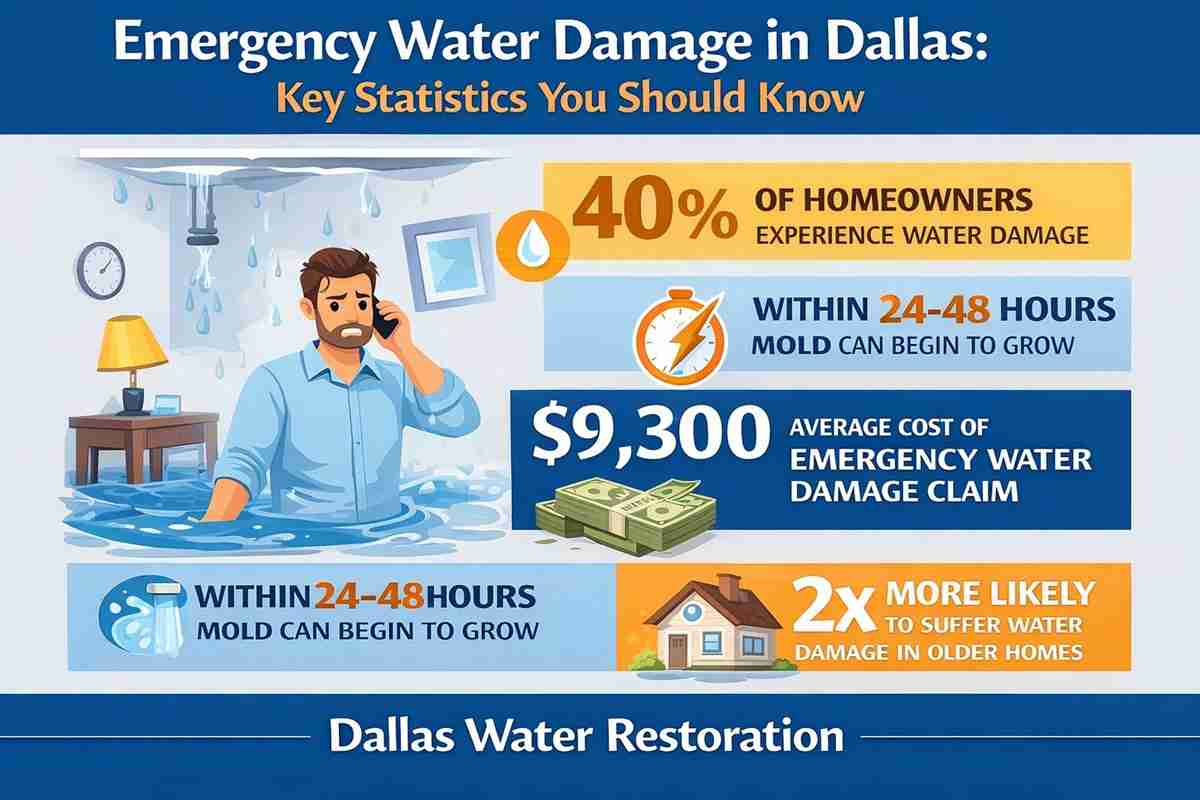
When water intrusion occurs, what you do in the first minutes and hours can significantly affect the outcome. Understanding the correct response is critical for effective Water Damage Restoration in Dallas. Acting quickly can reduce structural damage, prevent mold growth within 24–48 hours, and lower overall restoration costs. This guide explains the immediate steps Dallas homeowners and business owners should take after water damage to protect their property, health, and long-term investment.
Dallas-area residential and commercial buildings are also subject to substantial water damage in the form of storms, aging infrastructure, and temperature fluctuations. A pre-determined emergency checklist will make it easier for you to remain calm and act quickly to protect your property and receive professional assistance. This blog details what actions individuals should take during an emergency water incident and when to call upon experienced professionals in Water Damage Restoration Dallas, Texas.
Step 1: Your Safety Comes First
Before trying to remove any remaining standing water and/or beginning to address any impacted property from water damage, your personal safety must come first. There can be some significant hazards with water entering your home or business. Most hazards will not be immediately visible.
If there is still standing water and/or you suspect that electrical hazards are present, do not enter the premises until you are sure of your safety.
If water is still standing and/or if you suspect any risks from electrical devices, it is always best to shut off the power to all electrical devices and put on waterproof boots or shoes before continuing to assess the situation.
Step 2: Evaluate Damage After the Flood
After you have eliminated the source of the water, you’re going to want to assess the extent of the water damage to your home. Inspect all areas of your home affected by water, including floors, walls, ceilings, and adjacent rooms. Water may spread to areas beyond where you initially experienced water damage.
Water can often travel behind walls and under floors, causing hidden damage that you do not see, as with a small leak that can cause a major problem if not taken care of immediately.
Documenting all areas that were affected by the water will help with filing an insurance claim and allow you to plan for the restoration of your home.
Step 3. Categorize the Water
Categorizing the type of water you’re dealing with will help you determine what to do next. If the water is clean (usually from a supply pipe), it’s considered potable (safe to drink). If it is gray water (from a bathtub or washing machine), it may not be safe to drink.
If it’s black water (from a sewer), it is not safe to drink. The professional management of sewage backflow and floodwaters is essential because of their potential hazards (bacteria and chemicals). If you are affected by sewage or floodwaters, do not come into direct contact with them.
You will determine if you have any items (belongings) impacted by sewage or floodwaters by following the steps outlined below.
Step 4: Protecting Your Valuables and Important Items
Move Affected Items to a Dry Area
If safe to do so, move furniture, electronics, and personal items out of the area affected by sewage or floodwaters. Elevating items may also help prevent further damage.
By acting quickly, you can save valuable items and reduce total replacement costs. Even small actions can make a significant impact.
Document Any Damaged Items
Before you begin cleaning up, take photos or videos of all damaged items. This documentation will be necessary for insurance purposes.
Documentation is a critical part of the insurance claims process. The more detailed your documentation is, the more likely you will be to file a claim accurately and be compensated fairly. Keep all receipts for expenses you incur during the emergency.
Proper documentation will help protect you financially as you recover.
Step 5: Begin the Initial Drying and Ventilating Process
Increase Air Flow
If the weather permits, open any doors and windows to increase airflow in the area that is still wet. Increasing ventilation will slow the accumulation of moisture.
While fans can provide air circulation, they will not dry out your home as efficiently as professional drying equipment. Do NOT use household-sized vacuums to remove water if there is standing water.
Drying items promptly will decrease the chance of mold growth and help prevent secondary damage from occurring.
Avoid Making Any DIY Mistakes
Although normal drying may help remove some moisture, if you use the wrong techniques, you may push moisture further into your materials, which may result in hidden mold growth later.
Home improvement stores often do not stock the equipment required to provide effective moisture removal; therefore, using home improvement store equipment will not result in proper drying of items. Professional drying equipment is manufactured to provide complete moisture removal.
Knowing your limits will help you avoid larger problems from occurring.
Step 6: Prevent Mold Growth Before It’s Too Late
Know the Mold Risks in Homes in Dallas
Dallas has a warm climate, which is ideal for mold growth. Mold can start to grow anywhere from 24 to 48 hours after being wet. Even after all visibly wet materials have dried out, if moisture is still trapped in walls or floors, it can lead to mold growth. Early intervention is important to prevent further issues.
Quickly having a professional dry things out can greatly decrease the chance of mold.
Be Aware of the signs of Moisture at the Earliest Opportunity
Be aware of musty odors, discoloration of walls or floors, or unusual levels of humidity (higher than normal). These signs indicate moisture is likely present somewhere out of sight.
Ignoring early signs of moisture can lead to very expensive remediation later on. Addressing the moisture promptly will reduce your risk of health concerns associated with mold growth for you and your property.
Contact a professional for an inspection if you suspect that you have had water intrusion, as they can identify areas that are at risk of mold growth before the mold develops.
Step 7: Call a Professional for Water Damage Restoration
Why a Professional Is Needed
Water Damage Restoration in Dallas is much more than removing water; it also includes detecting moisture, drying structural elements (flooring, framing, etc.), disinfecting, and repairing.
Professional restoration teams in Dallas with experience utilize advanced drying tools and equipment to properly dry affected areas. This ensures that there is no remaining moisture.
The use of a professional for water damage restoration will speed up your insurance claims process and minimize your downtime.
Finding Help Quickly
During an emergency, if you are looking for Water Damage Restoration Near Me, be sure to get the phone number of a local company, as they will be able to respond faster than a non-local provider.
Companies that work locally to restore water damage also have a better understanding of the local building materials and weather patterns that can affect those materials. Their understanding will improve your odds of successful restoration of your property.
Promptly engaging a professional to mitigate your water damage will minimize repair costs and return your property to use sooner.
Step 8: Assist With Your Insurance Provider
Inquire regarding your insurance policy as soon as possible after discovering water damage by contacting your insurance provider and providing appropriate documentation and a detailed description of the damage.
Your timely contact helps prevent delays and confusion. Keep a record of all conversations and your claim number. Professional restoration documentation supports faster insurance provider coordination.
Follow Approved Restoration Procedures
Many insurance policies require approved vendors or specific procedures. Being aware of these requirements eliminates issues with your claim.
Restoration professionals often work directly with insurance providers to facilitate a faster restoration process and reduce stress during recovery. Clear communication creates fewer complications when resolving your claim.
Step 9: Plan for Repairs and Restoration
Understand the Restoration Process
Restoration consists of the drying, cleaning, sanitizing, and rebuilding processes of damaged areas, all of which are essential to full recovery.
If you do not allow adequate time for the drying process before beginning other repairs, you may trap moisture in the building, which can create additional problems later. Using a defined process allows for long-term results. Professionals will assist you and your family through each phase of restoration.
Preventative Measures for Long-Term Protection
Once your property’s restoration is complete, address underlying problems such as leaking or aging pipes or improper drainage. Making these changes will help prevent future damage.
Regular maintenance helps protect your property from experiencing similar damage in the future. It is always more economical to prevent than to repair water-related damage. By taking proactive steps, you will gain peace of mind.
Frequently Asked Questions About the Restoration Process
How quickly should I respond to water damage?
Immediately. The sooner you take action, the less damage and mold growth will occur.
Can I clean up water damage myself?
You may be able to clean small spills; however, professional restoration services are recommended for major damage, as undetected issues can occur.
How long will it take for a professional to restore my property to pre-loss condition?
Timeframes vary based on damage severity; however, most professionals can dry and restore properties within a few days after loss completion.
Will my insurance cover water damage?
Coverage depends on your policy and the cause of damage. Contact your insurance provider immediately for clarification.
Why is local knowledge important for Dallas water damage claims?
Professionals familiar with Dallas weather patterns and building structures provide more successful restoration outcomes.
Conclusion: Rely On Experts For Quality Restoration Services
Water damage emergencies can create confusion and chaos, but following a clear checklist from beginning to end gives Dallas residents confidence to act quickly. From ensuring safety to contacting trusted restoration companies, there are specific actions to minimize water damage.
By acting quickly and engaging professional restoration assistance, Dallas homeowners can restore their property to its pre-loss condition and regain peace of mind.
Dallas Water Restoration provides reliable water damage restoration in Dallas for homeowners and businesses. We specialize in emergency response, advanced drying, and complete restoration. Our dedicated team works to protect your property and minimize restoration time.
When you need dependable water damage restoration services, trust the fast and effective service we deliver. Contact us today to schedule a restoration consultation.