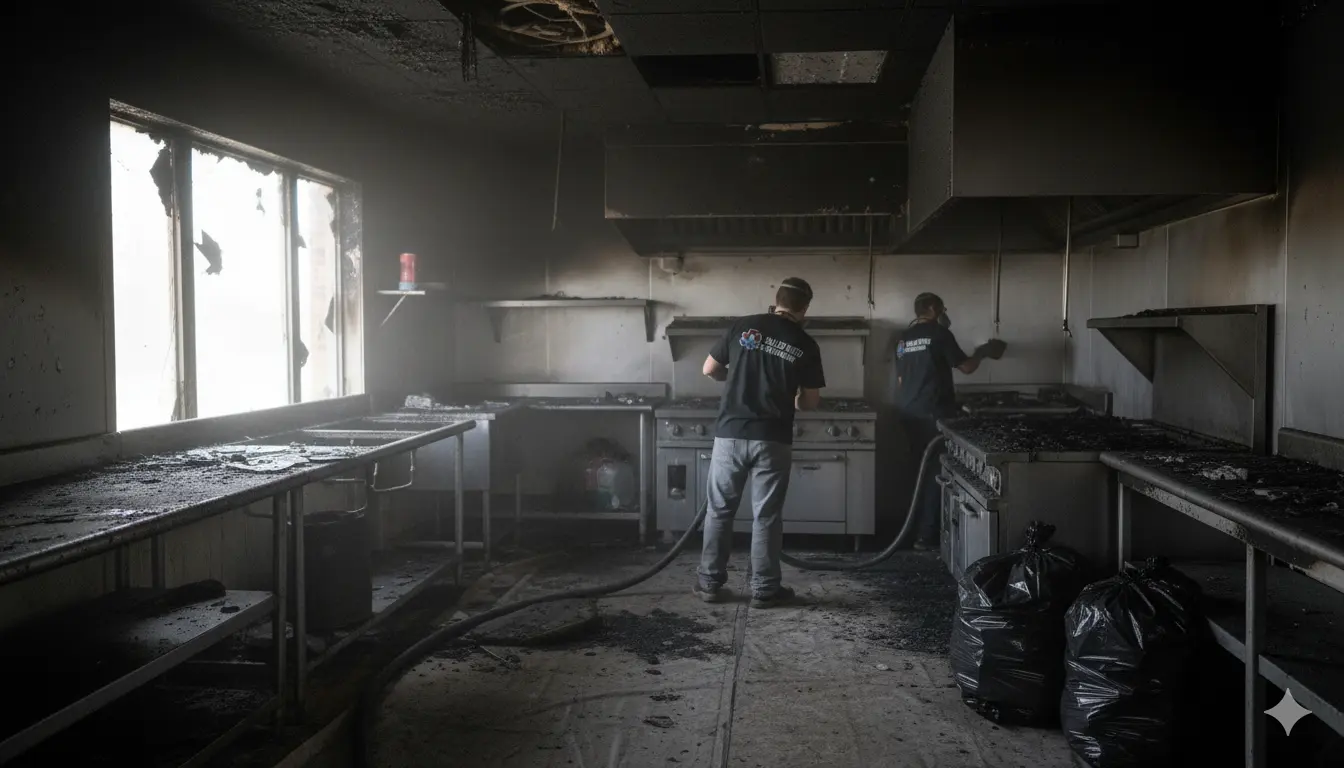
After a Dallas house fire, the visible char and water damage are the obvious problems. The expensive damage is what you cannot see in the first walk-through. Smoke film bonded to the inside of HVAC ductwork. Acidic residue etching brass fixtures. Soot pulled into electronics through every cooling vent. Hidden char inside wall cavities that wont reveal itself until drywall comes off. Dallas dry air and heat make this worse than in humid climates – soot bonds harder, faster. This guide explains the four categories of hidden damage that drive long-term Dallas fire restoration cost and why the first 72 hours decide whether items can be restored or must be replaced.
Key Takeaways
- ›Smoke residue is acidic and becomes permanent on hard surfaces within 72 hours.
- ›Dallas dry air accelerates soot bonding compared to humid climates.
- ›Soot in HVAC ducts spreads damage to every room – even ones the fire never touched.
The 4 Categories of Hidden Damage
1. Acidic Smoke Film on Hard Surfaces
Modern home fires burn synthetic materials – plastics, electronics, foam, vinyl. Combustion releases hydrochloric and hydrofluoric acid in the smoke. That acid bonds to metal, glass, mirrors, and ceramic surfaces. Within 72 hours it etches the surface permanently. Visible signs: yellowing of white surfaces, dulling of chrome and brass, cloudy mirrors, sticky film on countertops.
2. Soot in HVAC Ductwork
Forced-air HVAC systems pull soot into ductwork during and after the fire. Every cycle of the AC or furnace re-distributes soot throughout the home – including rooms that never saw flames. Per the IICRC S700 fire damage standard, HVAC inspection and decontamination is mandatory after structure fires.
3. Hidden Char in Wall Cavities
Heat from a fire transfers through wall framing where flames never appeared. Joists and studs inside wall cavities can be charred without visible damage to drywall surfaces. Charred wood loses load-bearing capacity. Identification requires opening drywall in suspected zones.
4. Smoke-Damaged Contents
Soft contents (upholstered furniture, mattresses, clothing, drapes) absorb smoke odor deep into fibers. Surface cleaning rarely removes embedded smoke. Hard contents (electronics, appliances, framed art) can usually be restored if treated within 72 hours.
Why Dallas Fires Have Worse Hidden Damage
Dry Air and Heat
Dallas humidity averages 40-65% with summer heat hitting 100°F+. Dry air carries soot particles farther and bonds them more aggressively to surfaces than humid coastal climates. Soot penetration into HVAC and contents is more severe.
Long Cooling Season
Dallas runs AC roughly 8 months per year. After a fire, soot in ductwork gets distributed continuously through that long cooling season – increasing exposure and progressively damaging electronics and surfaces.
Single-Story Slab Construction
Most Dallas homes are single-story on slab. Soot has fewer surfaces to settle on but reaches more quickly across open floor plans. Damage is more uniform across the structure than multi-story homes.
The 72-Hour Window
- Hour 24: Soot begins permanently bonding to surfaces. Air scrubbers should be running.
- Hour 48: Mold growth window opens for water-saturated areas. Antimicrobial treatment becomes mandatory.
- Hour 72: Acidic smoke residue becomes permanent on hard surfaces. Restoration shifts from cleaning to replacement.
Comprehensive Restoration Process
- Immediate board-up and tarp to secure structure.
- HEPA air scrubbing continuously for 3-7 days.
- Soot removal from hard surfaces using chemical sponges and pH-neutralizing cleaners.
- HVAC duct decontamination or replacement.
- Structural drying of any water-damaged areas.
- Antimicrobial treatment to prevent mold.
- Contents pack-out and restoration of salvageable items.
- Reconstruction (drywall, paint, flooring, fixtures).
Frequently Asked Questions
1.How much does Dallas fire damage restoration cost?
2.Will my insurance cover hidden smoke damage?
3.Can I clean smoke damage myself?
4.How long does Dallas fire restoration take?
When to Call Dallas Water Restoration
Dallas Water Restoration handles fire damage across DFW with IICRC-certified technicians, 24/7 emergency response, and direct insurance billing. We coordinate mitigation through reconstruction so you have one company managing the entire recovery.
Call our emergency line. The first 72 hours decide whether your contents and surfaces can be restored or replaced – speed matters more than price comparison.