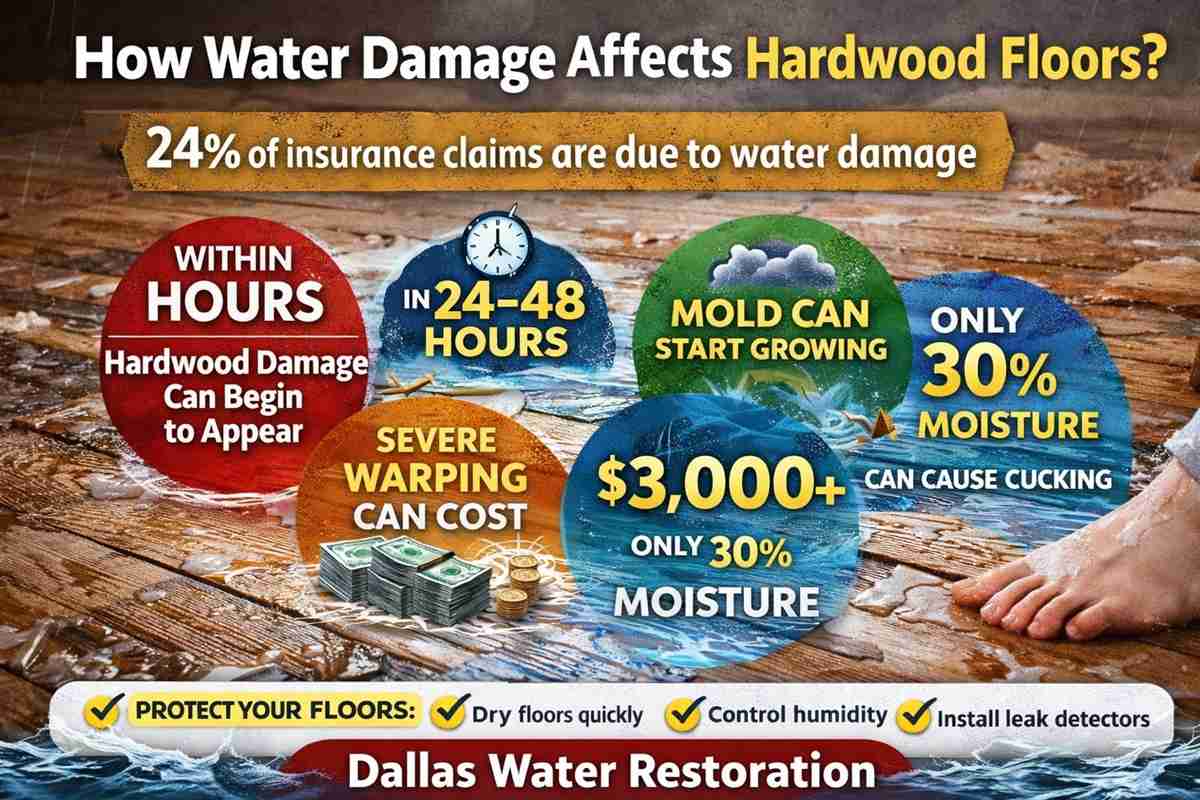
Hardwood floors may be one of the most important visual characteristics of houses across the city, but also one of the most vulnerable to water damage. For example, approximately 24% of homeowners’ insurance claims in Texas are attributed to water.
Within hours of coming into contact with water, most hardwood floors will already display indications of damage as a result of water exposure.
In Dallas, TX, some of the most common causes of flooring damage are sudden plumbing leaks, slab seepage, and flooding due to storms or appliance malfunctions. Acting quickly to restore floors can result in either minor repairs or the complete replacement of all hardwood flooring affected by the incident.
If you have been searching for Water Damage Restoration Near Me, the first thing you should do is determine what type of water damage exists in the hardwood flooring in your home. You may be surprised how quickly professional Water Damage Restoration Dallas services can save your hardwood flooring when contacted promptly after the incident.
Why Hardwood Flooring Is Very Susceptible to Water
Wood is a natural, porous material that very quickly absorbs moisture. When wet, it expands, and when dry, it contracts. These constant dimensional changes will cause damage both structurally and cosmetically to the wood itself.
Dallas homes may be especially affected due to changing seasons, foundation heaving, and slab leak issues. If immediate Water Damage Repair Dallas does not occur, moisture will find its way between the flooring and the subfloor, which can also become damaged.
What Water Can Do to Your Hardwood Floors Immediately
There are four stages of water damage, and the longer the moisture remains, the greater the damage you will experience.
Even a small amount of water can damage the finish, break down adhesive bonds, or ultimately weaken the structural integrity of the floor.
Surface Damage Caused by Water
When water sits on your hardwood floor, it can leave dark stains or cloudy patches on the surface. This is caused by moisture soaking into the finish and reacting with the tannins in the wood.
Surface damage in the early stages can sometimes be repaired through sanding and refinishing if Water Damage Restoration Dallas services arrive quickly to mitigate the damage.
Cupping and Crowning Effects
Cupping occurs when the edges of the floorboards are higher than the center. This happens because the bottom of the board absorbs moisture faster than the top.
Crowning is the opposite of cupping, where the center is higher than the edges. Both cupping and crowning represent uneven moisture levels within the board and require professional Water Damage Repair Dallas intervention to restore balance.
Long-Term Damage to Hardwood Flooring
Structural problems will only increase if water continues to sit unevaporated beneath the flooring.
Consistent moisture can weaken the subfloor, stimulate mold growth, and cause irreversible warping of the boards.
Warping and Buckled Floors
Hardwood floors that have absorbed excess moisture may experience significant warping or may completely separate from the subflooring.
Buckling is often associated with prolonged exposure to excess water and typically requires complete replacement of the affected boards; refinishing alone will not correct the problem. Timely responses from Water Damage Restoration Dallas specialists can significantly reduce the need for complete floor replacement.
Mold Growing Underneath Your Floor
If moisture is present, mold can begin to grow within the first 24–48 hours of exposure. This timeline may be even shorter due to the climate in Dallas.
Hidden mold beneath hardwood flooring can contribute to poor indoor air quality and will require specialized remediation in combination with Water Damage Restoration procedures.
Common Causes of Hardwood Floor Water Damage in Dallas
Knowing the usual causes of water-damaged hardwood floors will help homeowners avoid recurring issues.
Most water damage originates from interior or exterior sources.
Plumbing Leaks from Slab Foundations
Slab homes in Dallas are very susceptible to leaks. When a leak occurs below the slab, water from underground plumbing travels upward through flooring components.
Unseen slab leaks are one of the main reasons homeowners need Water Damage Restoration Dallas services.
Roof and Storm Leaks
Severe thunderstorms in North Texas may result in roof damage and/or window leaks. Water may enter through the ceilings and pool onto the hardwood flooring below.
Any roof leak can lead to floor damage that, if not properly addressed, can spread throughout the entire house.
Appliance Malfunctions
Dishwashers, refrigerators, washing machines, and water heaters are the most typical appliances that leak water.
Routine maintenance on appliances can prevent major water discharge and the need for professional Water Damage Repair Dallas services.
How to Repair Hardwood Floors That Are Water Damaged
The repair process will vary based on the extent of water damage and the length of time since the leak occurred.
To properly evaluate the overall condition of your floor, it is crucial to have a professional assessment to determine whether restoration or replacement is required.
-
Immediately Remove All Standing Water
To prevent further damage to your flooring, remove all standing water as soon as possible using professional-grade extraction equipment.
Using large-capacity electric pumps and commercial-grade vacuums, certified Water Damage Restoration Dallas personnel follow thorough procedures to remove excess moisture from your property.
-
Proceed With the Controlled Drying Process
Once standing water is removed, the next step is to use industrial-sized air movers and dehumidifiers to dry all materials (both flooring and subfloor) that sustained water damage. Moisture meters help validate that the drying process is effective and that no hidden damage exists requiring additional Water Damage Repair Dallas work later.
-
Sanding and Refinishing
Sanding and refinishing can restore the appearance of wood floors if damage is limited to surface staining or minor cupping. Refinishing will seal the wood and protect it from future moisture intrusion.
Severely warped or cupped boards typically need to be replaced on a board-by-board basis, and professional Water Damage Restoration Dallas contractors will carefully select replacement boards to ensure visual consistency.
In many instances, hardwood floors can be salvaged after water damage if attention is timely; the determining factor in restoration is how long moisture remains. The first 24–72 hours are critical in determining whether restoration is possible.
Signs of Salvageable Floors Include:
- Minimal cupping and no structural lift
- Surface discoloration only
- No mold odors present
- Subfloor still dry
Fast Water Damage Repair Dallas services provide a higher likelihood of successfully restoring hardwood floors.
Preventative Measures for Future Wood Floor Water Damage
Preventative maintenance will help minimize the probability of recurring damage. Homeowners in Dallas can take a proactive approach to preserving their investment.
Use Leak Detection Systems
Smart leak detection systems that alert homeowners to water leaks before extensive damage occurs are commonly recommended by Water Damage Restoration Dallas professionals.
Maintain Correct Humidity Levels
Indoor humidity levels should remain between 30%–50%. Excess moisture in the air can cause wood instability. Dehumidifiers can help prevent the expansion and deformation of hardwood floors during hot, humid weather.
Have Plumbing and Appliances Checked Regularly
Regular inspections allow you to find worn hoses and loose connections before leaks occur. Preventative maintenance will reduce the need for emergency Water Damage Repair Dallas services.
When to Contact a Professional Restoration Company
If you see persistent deformities in your hardwood floor, soft areas, mold odors, or standing water, you need immediate professional assistance.
Professional Water Damage Restoration Dallas experts have advanced drying equipment and moisture detection devices to salvage your floors from further damage.
Attempting DIY drying without removing all moisture may result in significant additional damage.
Frequently Asked Questions
- How long does it take for hardwood floors to show signs of water damage?
When wood is exposed to water, the first visible signs, such as stains or cupping, can appear within hours. - Can warped hardwood floors be flattened?
While minor cupping may return to normal after professional drying, severe warping requires plank replacement. - What is the average cost to fix water damage to hardwood floors in Dallas?
Costs vary depending on severity, but addressing damage quickly will help reduce overall expenses. - Is mold common under hardwood floors?
Yes, especially if moisture remains for at least two days. - Should I replace all my floors after experiencing water damage?
Not always. Modern methods of Water Damage Repair Dallas have restored many floor types without total replacement.
Conclusion: Protect Your Hardwood Floors by Acting Quickly
Hardwood floors are beautiful and provide your Dallas home with warmth and character. However, they are very susceptible to water damage, whether from surface stains, cupping, severe warping, or mold. The longer you wait to act and obtain a professional assessment, the more the damage will multiply.
The only way to protect your hardwood floors from water damage is to act quickly and have a trained professional assess them. In many cases involving plumbing leaks, storm damage, or appliance malfunctions, timely Water Damage Restoration Dallas services can salvage hardwood floors, but this depends on how quickly you act.
When you are experiencing problems with wet flooring and need to search for water damage restoration near me, you will find professional companies that treat your situation with urgency and understand the complexities of saving hardwood floors.
About Dallas Water Restoration
If you are looking for experts in Water Damage Restoration Dallas or Water Damage Repair Dallas for your home or commercial building, Dallas Water Restoration has the resources needed to address your situation. With advanced extraction tools, industrial drying systems, and moisture detection devices, they provide comprehensive solutions for slab leaks, storm damage, or appliance failure. Their goal is to help protect residential properties and maintain hardwood flooring in and around Dallas.