When a home or commercial building undergoes water damage, it can create complete chaos within minutes. In Dallas, water usually floods buildings due to plumbing problems, heavy rainfall, roof leaks, and appliance failures. Because of these issues, most property owners have no idea what a professional water damage restoration process involves or the value of having experts repair their homes beyond simply removing the water.
Water damage restoration is more than just removing visible water. The purpose of the professional water damage restoration process is to eliminate the potential for hidden damage, including mold growth and long-term structural concerns, by utilizing a systematic and controlled method.
Knowing what to expect from a professional water damage repair service in Dallas will aid clients in making educated decisions, avoiding costly errors, and protecting their property from future complications.
What makes a professional water damage restoration process different from the DIY method?
A professional Water Damage Restoration service must adhere to established industry standards set forth by the IICRC. These include proper water extraction, proper drying of all affected structures, and sanitization of all affected areas to ensure restoration and recovery occur safely.
Whereas DIY methods focus on visible signs of water damage, professional Water Damage Restoration services look beyond surfaces to discover and remedy moisture hidden in walls, floors, insulation, and framing materials. Addressing these hidden risks is what distinguishes a complete water damage restoration process from a partial, surface-level cleanup process.
Step 1: Emergency Response and Initial Assessment
The restoration process begins with an immediate response. The most important factor in the process is time. Water can quickly spread and cause additional problems as time passes.
Professionals conduct a safety assessment for electrical hazards, structural instability, and contamination levels before work begins to ensure the premises are safe for occupants and restoration teams.
Damage Assessment & Moisture Mapping
Using specialized technology, technicians use moisture meters and thermal imaging to locate visible and hidden water intrusion.
This allows for a complete assessment of damage, ensuring no areas are overlooked during restoration.
Step 2: Water Removal and Extraction
Water Removal Using High-Powered Equipment
Industrial pumps and vacuums provide more efficient results than consumer-grade equipment, enabling rapid water removal.
Rapid extraction minimizes drying time and prevents moisture from spreading to unaffected areas.
Avoiding Secondary Damages
The sooner water is removed, the less likely secondary damage, such as swelling, warping, and mold growth, will occur.
This step is essential to successful Water Damage Repair Dallas outcomes.
Step 3: Drying and Dehumidifying
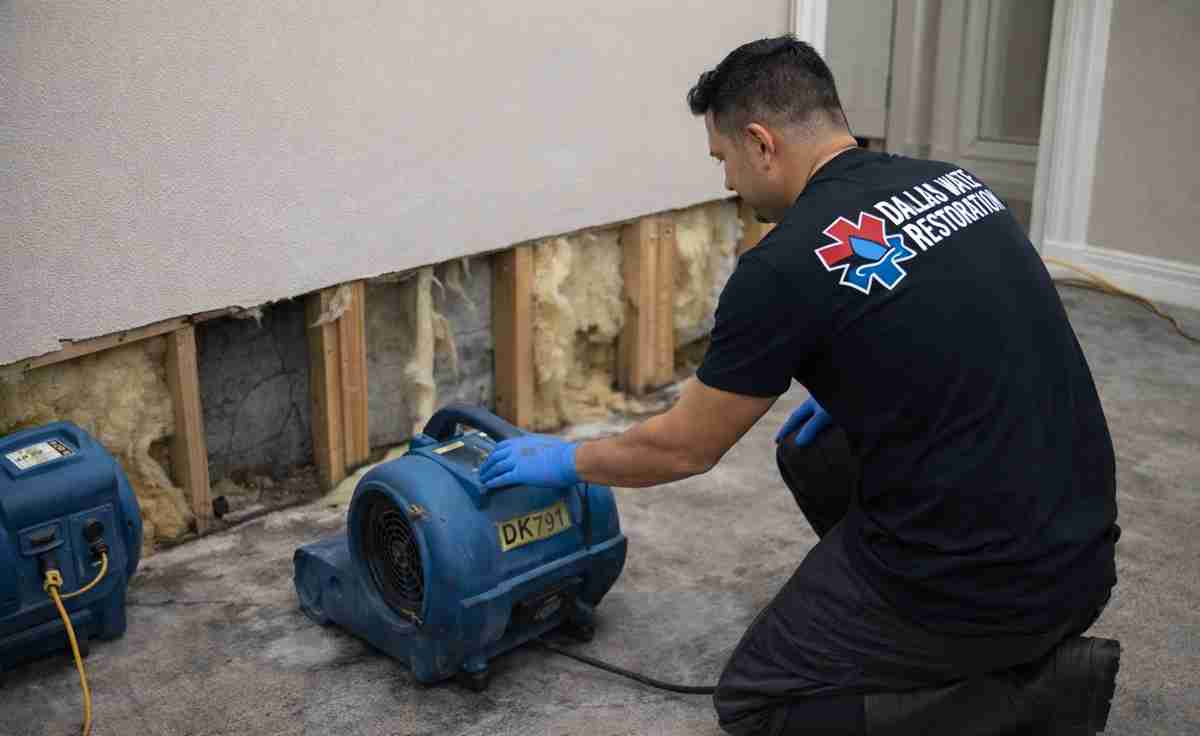
Proper Equipment Location
After water removal, the placement of air movers and dehumidifiers is planned to optimize air circulation and humidity control during drying.
Proper placement allows adequate airflow distribution throughout floors, walls, ceilings, and structural components.
Tracking Moisture Levels
Daily monitoring of moisture levels allows for tracking drying progress and confirmation that drying goals are met.
This data-driven approach ensures all drying is complete, not just what is visible.
Step 4: Damaged Material Removal
Demolition of Undryable Materials
Excessively damaged materials that cannot be dried or salvaged, such as saturated insulation, drywall, and flooring, will be removed.
Step 5: Reconstruction
Reconstruction of the Damaged Structure
Once all damage has been remediated and all surfaces have been cleaned, sanitized, deodorized, and returned to pre-disaster conditions, reconstruction of the structure begins.
Preparing to Rebuild
After all the steps above have been completed, your restoration professional will begin preparing to rebuild your property. Your restoration professional will consult with you regarding the scope of work to be completed and will arrange the necessary materials and equipment to complete the reconstruction.
Are your plans for reconstruction ready?
A reconstruction plan should include:
- A timeline for completion
- A list of all materials and their estimated costs
- The number of workers needed for the job
- A list of vendors used for any subcontracted work
- Any special requirements for permits, etc.
All of the above information should be documented in writing. This allows for a clear understanding of what is required to rebuild your home.
Step 6 – Restoration/Repair
Structure
All damaged drywall, trim, flooring, and structural components are repaired or replaced. Whenever possible, repair work will match existing finishes and comply with all building code requirements.
Restore Property to Its Original Condition
The goal is to restore the property to its original (or better) condition without lingering problems. This step concludes the entire water damage restoration process for Dallas property owners.
Step 7: Insurance Tracking/Documentation
Thorough, Near-Complete Documentation
Documentation provided by restoration professionals includes moisture measurements taken during drying, photos of affected areas, drying logs, and written reports.
Insurance claims rely heavily on this documentation.
Supporting Claims
In addition to providing documentation, restoration teams assist clients with filing insurance claims to avoid delays and disputes.
This assistance is extremely important during what can be a stressful experience.
Step 8: Emergency Water Damage Restoration
The time to seek professional help during an emergency water intrusion is immediately.
Taking quick action minimizes future damage and repair costs.
Step 9: Moisture or Odors That Last Too Long
If moisture, odors, or stains remain after initial cleanup, professional evaluation is recommended.
These indicators often suggest hidden damage.
Frequently Asked Questions About Professional Water Damage Restoration
How long does water damage restoration take?
Most projects take several days to a few weeks, depending on the type and extent of damage.
Are occupants required to vacate during restoration?
In most cases, occupants can remain in the home. However, severe damage may require temporary relocation.
Could mold still grow after cleanup?
Yes. If an area is not completely dried, the risk of mold growth increases. Professional services significantly reduce this risk.
Is professional restoration more expensive than DIY?
While upfront costs may be higher, professional restoration often prevents costly future repairs.
Does restoration affect insurance claims?
Yes. Detailed professional documentation greatly improves claim approval and coverage amounts.
Conclusion: Understanding How Professional Restoration Can Help You
Professional water damage restoration is a systematic program that protects your property from hidden damage, health hazards, and future failures. From emergency response through final repairs, each step is critical to full recovery.
Dallas property owners benefit from understanding the professional restoration process to make informed decisions and expedite recovery when water damage occurs. Expert assistance is not optional; it is essential.
911 Exteriors is a trusted provider of professional water damage restoration and repair services throughout Dallas and the surrounding areas. With highly trained technicians and advanced equipment, they respond immediately to water-related emergencies.
911 Exteriors specializes in comprehensive drying, repair, and restoration services designed to protect your property and provide peace of mind through reliable Water Damage Dallas services.